Final Exam

Every form of writing that we examined as a class over the past several months – the open letter, the personal essay, the memoir, and the auto-ethnography – demonstrates one or more concepts of rhetoric and/or composition employed by the authors that had written them. For instance, in a graduation speech given by David Foster Wallace at Kenyon College, he unmistakably makes use of pathos, ethos, and logos in order to establish his message. Despite his assertion that he is not “giving you moral advice, or saying that you are supposed to think this way” it is clear that the “you” in this larger context is indeed meant to actively choose what to think about. David Foster Wallace submits, “You get to consciously decide what has meaning and what doesn’t. You get to decide what to worship.” Without a doubt, this is an example of the ethos that he utilizes. In his description of the day-in, day-out routine of visiting grocery stores after far too many hours spent in work meetings and sitting through traffic, he includes details that are painstakingly accurate, causing the listener/reader to experience real and visceral dread (pathos). But this is not the only time that he provokes emotion from the audience, as his harsh truth that “most suicides are actually dead long before they pull the trigger” is raw and alarmingly personal, or so it seems in hindsight. Finally, I would contend that the entirety of David Foster Wallace’s speech is laid out in a logical format to provide justification for the conscious effort to live with an acute awareness of the lives of others, and to choose attention and discipline over the worship of meaningless and inconsequential undertakings (logos). His writing inspired me to incorporate logos, ethos, and pathos into my own open letter as well, and therefore attempt to create a logical counterargument in response to a blog post written by Lori Alexander. I also attempted to incorporate pathos by sharing with her and the others reading my piece the more raw pieces of my past, and include ethos in the form of Biblical truth.

Sandra Cisneros’ work “Only Daughter” is short, but nevertheless had a powerful effect on me. She tells of feeling erased by her father, but seeking his approval, of hoping to be recognized as his only daughter, but acknowledging his lack of understanding her desires. Her essay serves as an example of a nonlinear structure; specifically, by bringing in the appropriate context to illustrate her idea, the structure of her piece began to create itself. Cisneros filled her personal essay with the necessary components of the story she wished to tell, and in turn the form was created without a five-paragraph structure or a controlled design that includes specific aspects. She sums up her past in an overview of her experiences when needed, and gives specific examples and details when they work to show, not tell. While writing my own personal essay, this is something I strove for as well. I presented brief overviews of my past when it was necessary, such as only quickly explaining my previous experiences with inconsiderate roommates, and delved into detailed accounts when it was most effective, such as specific experiences that make my current roommate situation the best I can imagine.

While writing a memoir, it becomes necessary to carefully examine a particular event/slice of life and how it had affected the individual and influenced her in such a way to become the person that she is now. A memoir can also transcend a particular and personal experience in order to speak universally to the reader, so that they might relate in some way. This was the case in Janet Burroway’s “Embalming Mom,” a memoir written about the author’s then recently deceased mother. She incredibly exemplified the concept of a dual-perspective, as she considered specific events from the position of having already lived them and reflected back on them. She also allowed herself to write stories that are not entirely accurate to what happened, but that better capture her personal truth, or how she understands her mom and the memory overall. This memoir affected me greatly, both personally and within my writing. Having lost my own mother, I understood her perspective intimately; moreover, having been impacted by how much I could relate, it was helpful to understand how a personal experience could be made into something universal. This was my attempt in my memoir about spending a semester of my undergraduate career in Oregon. Although the experience is personal to me, I hoped that the reader might understand something about having to leave someplace that felt like home, and the draw of one day being able to return to a place that held a promise to be waiting for them.

Finally, there is the auto-ethnography. It is a style of nonfiction narrative that explores a curiosity of the author’s, or a fruitful question based on the writer’s relationship to the inquiry. It can and often does incorporate both primary and secondary resources to use as evidence, and can be written from the perspective of either a member of the target group studied or as an outsider, someone hoping to understand new viewpoints and discover something novel. In Jennifer Lunden’s “The Butterfly Effect” she does an incredible job weaving in and out of her personal experiences and the plight of the butterflies. Largely due to deforestation and habitat loss, as well as global warming, the monarch butterflies are quickly dwindling in numbers. Lunden’s love for the butterflies allowed her to draw from personal experiences with them as a child, and to craft a poignant message with a sense of urgency. Jennifer Lunden’s example of writing on a topic that intrigued and interested her was influential on my own choice of topic for the auto-ethnography – namely, a discussion on womanhood in the modern era. I write from a member of said group, and worked to give my personal perspectives while also learning more from others that have spoken out on the concept of gender.
 

Online Workshop Takeaway

For the final draft of the auto-ethnography, I must add in-text citations throughout my paper. Although I have added an MLA format works cited page, it is still necessary for me to accurately cite my references within the body of the paper. Additionally, I hope to edit any awkward or jumbled sentences that may still be present, as well as edit any typos or grammar mistakes. I currently feel confident and excited about completing the final draft of the auto-ethnography, and despite needing to make small changes, think that my paper is well on its way to being finalized.

Alexis Rivera_Ethno_Four

I am Woman, Hear me Roar: On Womanhood in the 21st Century

I walked into the bathroom, and my cousin Amanda was already inside the shower. This was typical; I was only about eight years old, and not yet able to fully comprehend the sexualization of naked bodies. Showering with Amanda was customary – in fact, it was an amusing childhood experience. Playing with dolls in the bathtub, talking in the shower, creating fake beards and crazy hair with the soapy water. But it had been a while since we had showered together, and something was different. She is older than me, about six years older than me, and her body was changing and shifting in ways that mine was not. I was confused and anxious as I looked in on her through the glass and steam. Hair had grown in places where there hadn’t been any before, and there were hills and valleys across her body where things used to be flat.

As soon as I got the opportunity, I frantically questioned my mom about what I had seen. What was different? Was my body going to do the same things that Amanda’s had? My mom answered calmly, explaining that Amanda was becoming a woman, and indeed, I too would go through similar changes in the future. Becoming a woman? What does that mean? What does it mean to be a woman? And now I ask, what does it mean to be a woman in the 21st century?

Claire Heuchan is a self-described Black radical feminist and is the author of the blog Sister Outrider. She won the Best Blog category for the 2016 Write to End Violence Against Women Awards and was shortlisted for the Emma Humphreys Memorial Prize.

Her blog details a five-part series on sex, gender, and sexuality, and inadvertently attempts to provide an answer to my questions. Her blog post entitled “Binary or Spectrum, Gender is a Hierarchy,” is intriguing, and I discovered it simply through happenstance. In this piece, she argues that it matters little if gender is understood in terms of a binary between males and females or as a spectrum with a multitude of possible gender identities: gender is still a socially constructed concept, and only serves to grant one group of people (namely, men) dominion over a subordinate counterpart (evidently, women). Heuchan argues that when completely broken down and examined, gender is why women who have been abused or raped get the brunt of the blame, since “she was asking for it” “she shouldn’t have been walking alone at night in an unsafe part of town,” or “she must have provoked him in some way.” Gender is why women are condemned for their sexuality, why only men are allowed to discuss pornography and masturbation, and why women are labeled “sluts” if they allow men sexual access to their bodies. And because people are gendered even before they’re born, it becomes impossible to “opt out” of the oppression so inherent within society.

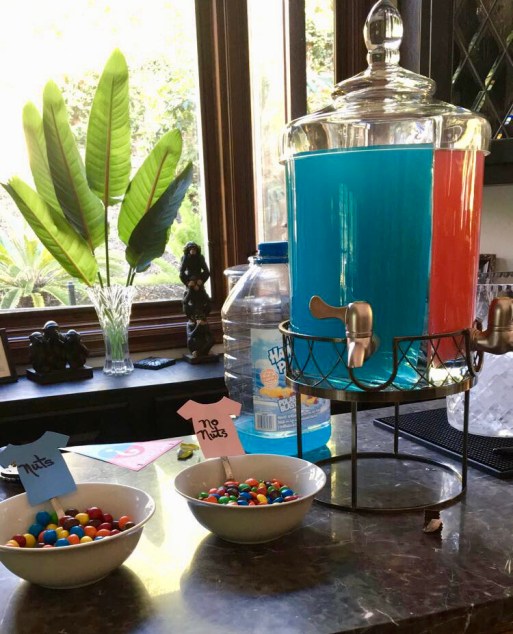
Present day, Amanda is 28 years old, with a daughter of her own turning one in just under a week, and has another child on the way. Before the birth of my second cousin, Amanda was given not one but two baby showers, and had a third “gender reveal” party. This is not uncommon; in fact, this type of party seems like a trend that an increasing number of expectant mothers adhere to. She had two different types of punch side-by-side, one blue and one pink. She had M&Ms in bowls with either “Nuts” or “No Nuts,” more commonly stated as “Peanut M&Ms” and “Plain M&Ms.” Her closest friend made cupcakes complete with pink and blue icing inside, and we were all able to guess the sex of the baby on paper ballots before the actual reveal. The guests were called outside into the backyard when the moment was right, and Amanda and her husband stood together with a giant black balloon and a long needle in their hands, ready to pop it. The countdown began, and soon enough pink confetti was swirling toward the ground as her guests squealed in delight.

IMG_1433.jpg

Alice Domurat Dreger is a historian, bioethicist, author, and former professor. She works with people at what she calls the edge of anatomy, such as conjoined twins and “intersexed people.” Her TED Talk entitled “Is anatomy destiny?” calls into question the hard lines drawn between our social categories, lines that are much blurrier in nature: between male and female for instance, among other anatomical distinctions.

Within her talk on a destiny designed by anatomy, Alice Dreger presents an intriguing yet familiar scenario. She mentions that despite being physically healthy, surgeons will often work to “normalize” their patients, essentially ridding them of anything out of the ordinary. Why? Simply because they threaten the status quo, they threaten our social categories. If someone doesn’t have the “correct” anatomy that fits with a particular identity, alterations must be made accordingly. As a society, we hold the concept that what it means to be a woman is to have a female identity, what it means to be a man is to have a male identity. But sex and gender is more complicated than this. Nature doesn’t draw the line for us between female and male, but rather, we draw that line on nature.

Amanda gave birth in early December, at a women’s hospital in Mission Viejo, California. It was late in the evening, already dark outside, and cold enough to grab a jacket out of the backseat of my car. As I walked through the hospital, I followed the signs plastered on the corridor walls until I reached the right room number. Family already surrounded my cousin in a swarm of bright pink, my grandmother having made matching shirts that read “Great Grandma,” “Grandma” “Uncle” and “Daddy,” to name a few. My second cousin was resting near the bed, in a tiny box-like incubator provided by the hospital. She was gorgeous, and “had all the right parts” I was quickly assured by Amanda’s younger brother, Jacob. This received a chorus of laughter from my family, and I smiled along with them.

Madeline Brown, a young scholar at Chapman University, spoke to me about a woman’s role from a traditional, albeit outdated, point of view. She noted that women customarily displayed feminine qualities and attributes, and if keeping in line with the usual stigma, “it was very much the stay-at-home, working woman kind of thing.” However, she also acknowledges a recent shift in the stereotypes that surround women. In her point of view, what it means to be a woman today is much more broad, complex, and has changed both for the better and for worse. Madeline argues that “in a perfect world, there shouldn’t have to be a fight to be treated as an equal person, but in reality, we (as with a lot of other groups in history) have been held back in certain ways because of the gender that we identify with.”

I sat on the couch in the living room of Amanda’s home, and held my second cousin on my lap. Her name is Kealani, and she was around nine months at the time. Her smile lights up her entire face, and her legs look and feel like the Michelin man’s. She tugged at my long black hair, and I did not mind one bit; in fact, I couldn’t seem to get enough of her laughter. Her goofy grin makes my nose crinkle, and her giggling makes me chuckle alongside of her. Her father sat down next to me, and Kealani reached out to him. He took her without further prompting, and I happily gushed from the unfolding scene: “She’s impossibly cute.” He smiled at me, and without skipping a beat responded, “I know. She’ll be breaking hearts left and right.”

What does it mean to be a woman? What does it mean to be a woman in the 21st century? Maybe it means that as a society, we need to let go of gender altogether. Rather than asking what it means to be a woman, I may need to instead focus on what it means to be a human being. Or perhaps it means that anatomy should no longer be used as a basis for gender, as what sits between the legs of an individual may or may not tie to their larger gender identity. It may simply mean that we stop defining women in terms of what men feel and think. This would mean that as a society, we would allow women to have an identity outside of the context of men.

Honorable possibilities, but more likely, being a woman in the 21st century means whatever we want it to mean.


Works Cited

Dreger, Alice Domurat. “Is Anatomy Destiny?” TED Talk. TEDxNorthwesternU, Dec. 2010, Evanston, Illinois.

Heuchan, Claire. “Binary or Spectrum, Gender Is a Hierarchy.” Sister Outrider , 5 Sept. 2017, sisteroutrider.wordpress.com/2017/09/05/binary-or-spectrum-gender-is-a hierarchy/.

Rivera, Alexis. “Interview with Madeline.” 3 Dec. 2018.

Thelilynews. “Gender-Reveal Parties Are Increasingly Popular. Are They Problematic? – TheLily.” Https://Www.thelily.com, The Lily, 21 May 2018, http://www.thelily.com/gender-reveal-parties-are-increasingly-popular-are-they-problematic/.

And My Title Is…

Richard Leahy’s “Twenty Titles for the Writer” exercise is lengthy, however I have chosen a select few to help me along in the process of creative brainstorming for a title:

3. Who are the Women of the 21st century, and What do They Believe in?

5. Do Women Define Themselves in the 21st century, or is Womanhood Defined for Them? – An Investigation

6. Pink and Blue

7. A Matriarchy

8. Discovering Womanhood in the 21st Century

9. On Womanhood in the 21st Century

11. Womanhood

12. Women

13. On Womanhood

14. Within the Woman

15. What is a woman?

16. Womanhood in the 21st Century

17. I am Woman, Hear me Roar

19. The Future is Female

20. I am Woman, Hear me Roar: On Womanhood in the 21st Century


Workshop Takeaway – 11/30

It has been incredibly difficult to effectively narrow down the aspects of my auto-ethnography topic to focus on. Since working continuously to ask questions of those around me, and conducting independent research, I have realized that what it means to be a woman in the 21st century is anything that women want it to mean. But I think since conducting my research, I have instead been asking the question, “What is a woman?” As the writing project continues, I wish to elaborate more on what Alice Domurat Dreger and Claire Heuchan are saying within their own personal works. From what I already have written, I hope to draw my own new conclusions and bring the audience into what I have learned from this. For the next draft, I also plan to add my MLA reference page and a start towards a conclusion.

Alexis Rivera_Ethno_Three

I walked into the bathroom, and my cousin was already inside the shower. This was routine; I was only about eight years old, and not yet able to fully comprehend the sexualization of naked bodies. Showering with my cousin Amanda was normal – in fact, it was a fun childhood experience. Playing with dolls in the bathtub, talking in the shower, creating fake beards and crazy hair with the soapy water. But it had been a while since we had showered together, and something was different. She is older than me, about six years older than me, and her body was changing and shifting in ways that mine was not. I was confused and anxious as I looked in on her through the glass. Hair had grown in places where there hadn’t been any before, and there were hills and valleys across her body where things used to be flat.

Later, I asked my mom what had happened. What was different? Was my body going to do the same things that Amanda’s had? My mom answered calmly, explaining that Amanda was becoming a woman, and indeed, I too would go through similar changes in the future. Becoming a woman? What does that mean? What does it mean to be a woman? And now I ask, what does it mean to be a woman in the 21st century?

Claire Heuchan is a self-described Black radical feminist and is the author of the blog Sister Outrider. She won the Best Blog category for the 2016 Write to End Violence Against Women Awards and was shortlisted for the Emma Humphreys Memorial Prize.

Her blog details a five-part series on sex, gender, and sexuality. Her blog post entitled “Binary or Spectrum, Gender is a Hierarchy,” is intriguing, and I discovered it simply through happenstance. In this piece, she argues that it matters little if gender is understood in terms of a binary between males and females or as a spectrum with a multitude of possible gender identities: gender is still a socially constructed concept, and only serves to grant one group of people (namely, men) dominion over a subordinate counterpart (evidently, women). Heuchan argues that when completely broken down and examined, gender is why women who have been abused or raped get the brunt of the blame, since “she was asking for it” “she shouldn’t have been walking alone at night in an unsafe part of town,” or “she must have provoked him in some way.” Gender is why women are condemned for their sexuality, why only men are allowed to discuss pornography and masturbation, while women are labeled “sluts” if they allow men sexual access to their bodies. And because people are gendered even before they’re born, it becomes impossible to “opt out” of the oppression so inherent in society.

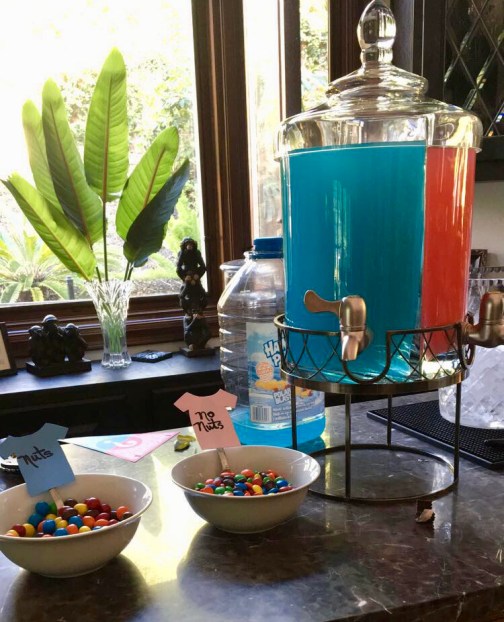
Amanda is now 28 years old, with a daughter of her own turning one in just a few weeks, and has another on the way. Before the birth of my second cousin, Amanda was given two baby showers, and threw a “gender reveal” party. This is not uncommon; in fact, this type of party seems like a trend that an increasing number of expectant mothers are adhering to. She had two different types of punch side-by-side, one blue and one pink. She had M&Ms with either “Nuts” or “No Nuts,” more commonly stated as “Peanut M&Ms” and “Plain M&Ms.” Her closest friend made cupcakes with pink and blue icing inside, and we were all able to guess the sex of the baby on paper ballots before the actual reveal. The guests were called outside into the backyard when the moment was right, and Amanda and her husband stood together with a giant black balloon in their hands, ready to pop it. The countdown began, and soon enough pink confetti was swirling toward the ground as her guests squealed in delight.

IMG_1433.jpg

Alice Domurat Dreger is a historian, bioethicist, author, and former professor. She works with people at the edge of anatomy, such as conjoined twins and “intersexed people.” Her TED Talk entitled “Is anatomy destiny?” calls into question the hard lines drawn between our social categories, the lines that are actually fuzzy between male and female, among other anatomical distinctions.

Alice Dreger brings up an interesting topic within her talk on anatomical destiny, if you will. She mentions that despite being physically healthy, surgeons will often work to “normalize” their patients, essentially ridding them of anything out of the ordinary. Why? Simply because they threaten the status quo, they threaten our social categories. If someone doesn’t have the “correct” anatomy that fits a particular identity, alterations must be made accordingly. As a society, we hold the concept that what it means to be a woman is to have a female identity, what it means to be a man is to have a male indentity. But sex and gender is more complicated than this. Nature doesn’t draw the line for us between female and male, but rather, we draw that line on nature.

Amanda gave birth in early December, at a women’s hospital in Mission Viejo. It was later in the evening, already dark outside, and cold enough to grab a jacket out of the backseat of my car. As I walked into the hospital, I followed the signs until I reached the right room number. Family surrounded my cousin already, my grandmother having made pink shirts that read “Great Grandma,” “Grandma” “Uncle” or “Daddy.” My second cousin was resting near the bed, in a tiny box-like bed provided by the hospital. She was gorgeous, and “had all the right parts” I was assured by Amanda’s younger brother, Jacob. I suppose that’s all that was needed to be said about that.


From the Personal to the Universal

Taking a story that is personal to an individual and relating it to the universal experiences of all can be difficult, but with my focus on womanhood and what it means to a woman in the twenty-first century it should be easily comprehensible for a little over half of the population. Regardless of the definition that one assigns to womanhood, or the individual experiences one has had because of their gender identity as a woman, there is an obvious commonality – that there is a need for this discussion on gender. Whether someone is well versed on the topic of gender, or has hardly given any thought to his or her personal gender identity, the concept of gender has shaped each individual living within our society. Taking my personal perspective and the perspective of those I interview, along with the perspectives of those beyond my inner circle through blog posts or podcasts, I can create a cohesive narrative detailing womanhood in the twenty-first century. My personal perspectives have been shaped by childhood experiences, both positive and negative, and I will be periodically interjecting pieces of my own story. With this, I also hope to weave through the ethnography experiences I share with the women in my life I have already interviewed, such as my roommate and my aunt. In addition, the perspectives that come from academic journals or other such resources will provide the meat of the paper, as it is concrete evidence of shared experiences worth writing about.


Alexis Rivera_Ethno_Draft Two

I walked into the bathroom, and my cousin was already inside the shower. This was routine; I was only about eight years old, and not yet able to fully comprehend the sexualization of naked bodies. Showering with my cousin Amanda was normal – in fact, it was a fun childhood experience. Playing with dolls in the bathtub, talking in the shower, creating fake beards and crazy hair with the soapy water. But it had been a while since we had showered together, and something was different. She is older than me, about six years older than me, and her body was changing and shifting in ways that mine was not. I was confused and anxious as I looked in on her through the glass. Hair had grown in places where there hadn’t been any before, and there were hills and valleys across her body where things used to be flat.

Later, I asked my mom what had happened. What was different? Was my body going to do the same things that Amanda’s had? My mom answered calmly, explaining that Amanda was becoming a woman, and indeed, I too would go through similar changes in the future. Becoming a woman? What does that mean? What does it mean to be a woman? And now I ask, what does it mean to be a woman in the 21st century?

Claire Heuchan is a self-described Black radical feminist and is the author of the blog Sister Outrider. She won the Best Blog category for the 2016 Write to End Violence Against Women Awards and was shortlisted for the Emma Humphreys Memorial Prize.

Her blog details a five-part series on sex, gender, and sexuality. Her blog post entitled “Binary or Spectrum, Gender is a Hierarchy,” is intriguing, and I discovered it simply through happenstance. In this piece, she argues that it matters little if gender is understood in terms of a binary between males and females or as a spectrum with a multitude of possible gender identities: gender is still a socially constructed concept, and only serves to grant one group of people (namely, men) dominion over a subordinate counterpart (evidently, women). Heuchan argues that when completely broken down and examined, gender is why women who have been abused or raped get the brunt of the blame, since “she was asking for it” “she shouldn’t have been walking alone at night in an unsafe part of town,” or “she must have provoked him in some way.” Gender is why women are condemned for their sexuality, why only men are allowed to discuss pornography and masturbation, while women are labeled “sluts” if they allow men sexual access to their bodies. And because people are gendered even before they’re born, it becomes impossible to “opt out” of the oppression so inherent in society.

Amanda is now 28 years old, with a daughter of her own turning one in just a few weeks, and has another on the way. Before the birth of my second cousin, Amanda was given two baby showers, and threw a “gender reveal” party. This is not uncommon; in fact, this type of party seems like a trend that an increasing number of expectant mothers are adhering to. She had two different types of punch side-by-side, one blue and one pink. She had M&Ms with either “Nuts” or “No Nuts,” more commonly stated as “Peanut M&Ms” and “Plain M&Ms.” Her closest friend made cupcakes with pink and blue icing inside, and we were all able to guess the sex of the baby on paper ballots before the actual reveal. The guests were called outside into the backyard when the moment was right, and Amanda and her husband stood together with a giant black balloon in their hands, ready to pop it. The countdown began, and soon enough pink confetti was swirling toward the ground as her guests squealed in delight.

IMG_1433.jpg

Research Exercise: Auto-Ethnography

In-Person Interviews

It would be easy to assume that the women surrounding me on a daily basis share similar views about the question I pose: what does it mean to be a woman in the 21st century? However, as with so many other topics, this is hardly the case. My own ideologies often lead me to a false consensus, assuming that those in a similar stage of life or those with a similar background as me hold the same beliefs; however, this is often not the reality. Therefore creating a loose interview schedule to ask the women I know how their womanhood affects their interactions with the broader culture can and will expand my inquiry. Currently, the specific women I plan to interview are my closest friend (Madeline), my godmother (Brunhilda), my roommate (Jessica), and my boss (Brooke).


Chapman University Leatherby Libraries Search Engine

Within both Psychology and Sociology courses at Chapman University, the databases made available through the library have been incredibly helpful in broadening my horizons on topics I previously knew little about. The same will be said for my fruitful question. Even after a simple search of the keywords “gender” “identity” and “woman” together, articles that may prove interesting such as “Features of Coping Behavior of Women with Different Sexual Orientation and Gender Identity” and “The Influence of Gender Identities on Body Image and Breast Health among Sexual Minority Women in Taiwan: Implications for Healthcare Practices” appeared within an instant.


Google

Perhaps the simplest research resource to utilize would be Google, and after searching my fruitful question word for word, it is clear that many others before me have attempted to tackle this inquiry. This will undoubtedly provide me with a solid basis of what others before me have considered in their blog posts or Youtube videos, and I am sure this will both support and expand my inquiry.

“The Butterfly Effect” Annotation

Author: Jennifer Lunden

Important Vocabulary: Abut. (Of an area of land or a building) be next to or have a common boundary with. Voracious. Wanting or devouring great quantities of food. Mandible. The jaw or a jawbone, especially the lower jawbone in mammals and fishes. Interminable. Endless (often used hyperbolically). Diapause. A period of suspended development in an insect, other invertebrate, or mammal embryo, especially during unfavorable environmental conditions. Egregious. Outstandingly bad; shocking. Docent. A person who acts as a guide, typically on a voluntary basis, in a museum, art gallery, or zoo.

Questions: If things progress much in the same way they have been, what is the projected year that monarchs will become extinct?

Initial Reactions: Lunden does an incredible job weaving in and out of her personal experiences with habitat loss and migration, with the butterfly’s, and with Ro Vaccaro’s. Although she wrote a fair portion of “The Butterfly Effect” reflecting on her own struggles with a particular sensitivity to harsh chemicals, this clearly demonstrates a parallel to the current plight of the monarch butterflies. Largely due to deforestation and habitat loss, as well as global warming, the monarch butterflies are quickly dwindling in numbers. Lunden’s love for the butterflies allowed her to draw from personal experiences with them as a child, and to craft a poignant message with a sense of urgency.