Alexis Rivera_Memoir_Draft Three

There’s much that can be said about Lewis and Clark College: its beautiful campus, its laidback atmosphere, its impressive study abroad programs, and its liberal student body…but these snippets of a description do little to capture its appeal. Stepping onto the campus felt like I was embraced in a warm hug, or breathing a sigh of relief after a long day – in other words, Lewis and Clark College felt like home.

I walked through Copeland Hall a few days into my first year, traversing the plain dorm hallway with stark white paint and a dirtied gray carpet, exposed pipes along the ceiling and thin walls. It was a walk I was accustomed to. I fiddled with my headphones, attempting to untangle their mess while I hurried to class across campus. As I reached to open the door, someone twisted the handle from the other side. I lifted my head and met the gaze of a blonde-haired, blue-eyed peer holding a guitar and smiling goofily at me. I blushed immediately, attempting to smile at him casually while simultaneously maintaining some semblance of composure.

Things continued much in the same way for weeks. Agonizingly long weeks. Simple hellos, passing each other in the hallways, discovering (through careful inspection) that we were floor mates, and attempting to spend most of my time studying in the common area nearest his room.

About a month into the semester, I had established myself at Lewis Clark. I had joined a club dedicated to raising money to build homes in third-world countries, a club that challenged its members to workout everyday, and regularly attended sporting events and theater performances. I spent most time with Journey and Elvi, two women that opened up a world unlike any I had experienced before.

Journey had somehow gotten us a bottle of Fireball, a strong and sweet whiskey that is probably the favorite of no one who isn’t in college. We sat on the floor of the dorm room, in between Elvi’s and my bed, the three of us in a circle around the bottle. Although we could easily just drink, I suggested we play a game instead. My memory is fuzzy and I don’t remember the game, but it doesn’t matter, because I remember the fun that came afterwards. Journey and I choreographed a dance together that I still have the video of. It was a dance to Fergie’s “Fergalicious”: inherently ridiculous but altogether fun. At the countdown of “Four trés two uno” we started to dance, shaking our heads wildly from side to side and pumping our fists into the air.

Needing to take a break and hoping to cool down with something cold, I grabbed ice cream from our mini-fridge in the corner of the room underneath the desk that had been built into the wall. It was Honey Lavender flavor from Salt and Straw, an ice cream shop that originated in Portland and has the most interesting flavors that I had ever seen. The olive oil flavor is a personal favorite of mine, and is only available in Oregon.

As I took a spoon straight into the pint of ice cream, I remembered I had a load of laundry waiting for me in the basement. Luckily, at Lewis and Clark, there was an unwritten rule that stealing other people’s clothes is unnecessary, immature, and rude, so I could spend time in my room without having to sit near the machines while the clothes were washed and dried. Stepping out of the room and still eating ice cream, I spotted someone in the study area common for each floor. He was difficult to miss. Feely confident and fuzzy from the alcohol, I approached him coolly. He had an easy smile, the kind that lights up an entire room, and I was pleased to see him grinning at me. His eyes sparked and he raised a hand up to wave. It wasn’t until later in the semester that we held hands in public, or even at all, and once had a homeless person tell us we were a cute couple as we walked around downtown Portland together.

But for now, I simply smiled back. We chatted, and I was confident enough to tap his nose with my finger at one point during the conversation, when he was being especially cute. I dismissed myself to take care of the laundry, but I’m almost positive it was this interaction that caused him to eventually ask me out. I think I used to be more spontaneous, a little more carefree.

I finally grabbed my laundry, made it back up the stairs, and to my room. Journey and Elvi were still there, laughing and chatting like I had never left. They had both gotten snacks of their own at this point, a frozen pizza that they microwaved and chips.

This is how I choose to remember my time spent in Portland. This is how I choose to remember that semester. That semester I found out I was going to leave my new life there, and say goodbye to the happiest I had ever been. That semester I cried and laughed, and hated having to pack up to leave. I will never be the same for so many reasons, but I choose to remember this season fondly.

A Week in the Life of Me

Chapman University, Cru, pups, food and Disneyland. It’s easy to see where I find myself in each photo, to reminisce on the time spent with each person or in each place and how I am continuously shaped by these memories.

However, my weeks don’t always look this pretty. I spend most of my time sitting in front of a computer, working diligently while writing essays or creating surveys. I rarely have the time to visit Disneyland despite a monthly payment for an annual pass, and I only visit home once every few weeks to lay in the entryway while my dog happily licks my face.

But each week, despite the monotony of routine, I am influenced by my values and experiences. I move and shift accordingly, and while all undergraduate students attend classes, I do so in the hopes of moving toward a Master’s degree. While most young men and women have somewhere they can call home, I call my aunt and uncle’s house home, with their adoption of my Yorkshire terrier-Poodle mix a welcome addition to the family. And while everyone must consider food as a necessary part of their day, I carefully avoid dairy and nightshade vegetables to combat any adverse reactions to what I am eating.

There is meaning in the small, in the seemingly insignificant, in the mundane. The meaning comes from me, and shines through me, and is me.

Alexis Rivera_Memoir_Second Draft

Lewis and Clark College is nestled in the Willamette Valley of Portland, Oregon, and proudly boasts of its high ranking on lists of the most beautiful college campuses in the United States, and many educational opportunities of outdoor trips that involve hiking, kayaking, and/or skiing. While these aspects of the school certainly played a part in my decision to attend after high school, it was largely something else that guaranteed my decision: the feeling of being at home. In the midst of college applications and AP testing, my family and I took a trip to Portland to visit the campus, and within a few minutes I had made my decision.

As I graduated high school, spent my last summer living with my parents in California, and finally moved into my dorm, I could increasingly see that I had made the right decision.

It was Elvira, my roommate, Journey, our close friend, and myself. Journey had somehow gotten us a bottle of Fireball, a strong and sweet whiskey that is probably the favorite of no one who isn’t in college. We sat on the floor of the dorm room, in between Elvi’s and my bed, the three of us in a circle around the bottle. Although we could easily just drink, I suggested we play a game instead. My memory is fuzzy and I don’t really remember the game, but it doesn’t matter, because I remember the fun that came afterwards. Journey and I choreographed a dance together that I still have the video of. It was a dance to Fergie’s “Fergalicious,” inherently ridiculous but altogether fun. At the countdown of “Four trés two uno” we started to dance, shaking our heads wildly from side to side and pumping our fists into the air.

Needing to take a break and hoping to cool down with something cold, I grabbed ice cream from our mini-fridge in the corner of the room underneath the desk that had been built into the wall. It was Honey Lavender flavor from Salt and Straw, an ice cream shop that originated in Portland and has the most interesting flavors that I had ever seen. The olive oil flavor is a personal favorite of mine, and is only available in Oregon.

As I took a spoon straight into the pint of ice cream, I remember I had a load of laundry waiting for me in the basement. Luckily, at Lewis and Clark, there was an unwritten rule that stealing other people’s clothes is unnecessary, immature, and rude, so I could spend time in my room without having to sit near the machines while the clothes were washed and dried. Stepping out of the room and still eating ice cream, I spotted someone in the study area common for each floor. As the floors were co-ed, he was a neighbor from another hall. I had seen him before, and only talked to him once or twice. But, feely confident and fuzzy from the alcohol, I approached him easily. He had an easy smile, the kind that lights up an entire room, and I was pleased to see him grinning at me. His blue eyes sparked and he raised a hand up to wave. It wasn’t until later in the semester that we held hands in public, or even at all, and once had a homeless person tell us we were a cute couple as we walked around downtown Portland together.

But for now, I simply smiled back. We chatted, and I was confident enough to tap his nose with my finger at one point during the conversation, when he was being especially cute. I dismissed myself to still handle my laundry, but I’m almost positive it was this interaction that caused him to eventually ask me out. I think I used to be more spontaneous, a little more carefree.

I finally grabbed my laundry, made it back up the stairs, and to my room. Journey and Elvi were still there, laughing and chatting like I had never left. They had both gotten snacks of their own at this point, a frozen pizza that they microwaved and chips.

This is how I choose to remember my time spent in Portland. This is how I choose to remember that semester. That semester I found out I was going to leave my new life there, and say goodbye to the happiest I had ever been. That semester I cried and laughed, and hated having to pack up to leave. But I was going home to take care of my mother, who had been diagnosed with cancer. I will never be the same for so many reasons, but I choose to remember this season fondly.

Alexis Rivera_Personal Essay_Final Draft

I had been sitting with a close friend of mine on our university campus in an outside patio, feeling confident and indignant despite being unprovoked. In a few short minutes, it would be the first time that Madeline (my soon-to-be roommate) and I could spend time together beyond a simple hello, and we were planning to discuss our expectations for the year ahead. I had been carefully preparing, debating how I might best present myself with an aura that could effectively intimidate Madeline.

I had just spent my first year at Chapman University living with women who seemed to have a knack for preying on the weaknesses of others, and used them to manipulate and bully. I had spent a year with rumors swirling around my home about my sexuality, receiving the silent treatment, being yelled at, and feeling a constant need to walk on eggshells. Righteously angry and unwilling to compromise, I hoped to show Madeline that intimidating me was impossible, and I was uninterested in the façade of pleasantries. I was determined to never again be taken advantage of, and perhaps even more intensely determined to avoid situations that might lead to conflict in any way, shape or form. Our meeting seemed like the opportune moment to establish my dominance within our relationship.

When Madeline arrived at our table, she was exactly the girl I expected, and the complete opposite of me: bubbly, exuberant, and sweet. We walked together to a popular coffee shop just outside the borders of campus, and her demeanor quickly changed in response to my deliberately hostile tone. As we chatted over coffee and tea about our past and how we hoped to see our future, it became increasingly clear that the year ahead might prove difficult. She was relaxed about her expectations for a roommate, while I had clear and distinct boundaries I demanded her to follow. The contrast between our styles, beliefs, and attitude was stark: we were polar opposites. She left our conversation apprehensive of a friendship with me, and I left knowing that I had accomplished my goal.

However, as time wore on, our relationship began to shift. It was about a month into living together, and Madeline was the last one home. The anniversary of my mother’s passing, September 27, was nearly over. I was sprawled on the couch, tissues crumpled on the floor and my laptop open to a photo album entitled “Mom and I.” All day had been a transition from the bed to the couch and back again. My face was tear-soaked and swollen, and I was having difficulty focusing on anything in front of me. Outside our apartment I could hear Madeline struggling to fit her keys into the lock, and the crash of heavy bags falling to the floor as she worked to open the door. Swinging our front door open, she shouted “Fall Haul!” and bounced over to me on the couch. She embodied everything I wasn’t in that moment, and perfectly provided the light to my darkness, the energy to my lethargy. Out of her bags, she began to describe each item one by one, all pumpkin-flavored, and all for me. First the pumpkin eggnog, then the pumpkin ice cream, pumpkin pop-tarts, pumpkin yogurt…a seemingly endless array of treats that reminded me both of the things I love, and how loved I am.

Madeline’s gesture softened me, and I sobbed violently into her arms. She allowed me the space to cry when I needed to cry, and she brought me joy on a day that might otherwise prove to be the worst of my year. Although uncomfortably new at first, it was our differences that allowed her to see past my walls and care for me in ways that others hadn’t. And in fact, this was not the only time that she had done exactly that.

At this point, Madeline and I were clear and established friends. It was not uncommon for her and I to stay up talking in the middle of the night, or joke with each other while brushing our teeth. But everyone has secrets, parts of their past that hurt more than others. It’s only ever a select few that get to see the vulnerability there, the wound that others or you had left behind, undressed and raw without the layers that normally serve to hide the ugliness. Without meaning to, I showed Madeline the shameful pieces of my past.

I had tried to shake the feeling I had that night, a feeling of dread that only comes over you when something, sometimes seemingly out of the blue, reminds you of that thing you wish you could forget. Someone close to me had described her experience with suicidal ideation, and it was simply more than I was prepared to handle. I paced wildly around our living room, ran on the treadmill in our apartment gym, and drank copious amounts of wine. This is the state that Madeline found me in. Pushing open our front door, she looked at me, paused, closed the door behind her and came to sit beside me. She reached out her hand to meet mine, and we sat silently, her palm resting on top. It was a comfortable silence, the type of silence that doesn’t need words or interaction, because it speaks already of what we couldn’t say.

The round, gold clock that sat on the side table ticked, while the fan overhead buzzed and swayed. The cars passed noisily just outside our patio door, and there was music drifting in from our upstairs neighbor.

And we remained silent still. And this was enough. Because what Madeline didn’t say was, “Don’t worry, God’s got this,” or “It’ll all be okay,” or even “I’m sorry.” All I needed in that moment was for someone to sit in the mess and the hurt with me, and she saw that for what it was.

She was never the friend I wanted, expected, or thought I needed. But, it is our differences that create a constant and beautiful tension between the known and the unknown, the familiar and the unfamiliar. Our friendship is dynamic, continuously shifting into territories I haven’t explored in other relationships. She challenges me to view things from a different perspective, and to appreciate the little things in life.

I suppose now I’ll always have to expect the unexpected, especially in friendships.

Lyric Essay (Final Draft)

good-one-too--lo.jpg

“Mustard seeds can be used fresh, but like other herbs and spices, if you plan on storing them long term, they will need to be dried. Mustard is an annual plant (life span: one year).” – Growing Mustard Seed: How to Plant Mustard Seeds

There is a mustard plant that sits and deteriorates at the bottom of a container, almost undetectable among the eclectic assortment of items. This includes multiple photographs without frames, a personalized mug, a deck of cards with 52 individual reasons why someone loved somebody else, and hand-written notes, lists, and letters. The plant has long since dried out, and with each passing year slowly disintegrates into dust.

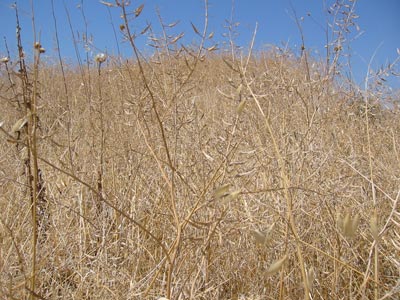
On the drive from San Francisco to Los Angeles, there are farms that will sell you avocados six for a dollar, and weeds that grow wildly without being tended to. About three weeks into dating, we spontaneously decided to take a trip to San Francisco, and on our way back spotted mustard growing along the edge of the concrete road. It was bright yellow, vibrant, and deliciously dangerous to attempt to grab. He slowed down the car ever so slightly, and I rolled down the passenger side window. Reaching my hand and torso out of the car, I grabbed wildly for the mustard, and pulled whatever might come back with me.

Periodically, after adding something new to the container, I will see the mustard there, and consider carefully removing the other items, grabbing a paper towel, and cleaning the mess that has gathered at the bottom. But instead I let it stay there, and close the lid until I have something else to add.

“Embalming Mom” Annotation

Author: Janet Burroway

Important Vocabulary: Taut. Stretched or pulled tight; not slack. Eyelet. A small round hole in leather or cloth for threading a lace, string, or rope through. Naugahyde. An artificial material designed to resemble leather, made from fabric coated with rubber or vinyl resin. Oleander. A poisonous evergreen Old World shrub that is widely grown in warm countries for its clusters of white, pink, or red flowers. Corrugation. A ridge or groove of a surface that has been corrugated. Plaint. A complaint; a lamentation. Pushmi-pullyu. A fictional animal with two heads at opposing ends of its body, in Hugh Lofting’s “The Story of Doctor Dolittle”. A person who behaves in a conflicting or contradictory manner. Mottle. Mark with spots or smears of color.

Questions: How do the other essays in Burroway’s collection depict her mother?

Notable Quotes: “But I told him safety is not the point; the point is feeling safe.” “The pansies on the ironing board I remember wearing in the sandbox under the oleanders before I started school, which means that my mother is about thirty-five. I am forty-five and three months by the calendar on the window sill to the left of my typewriter.” “I can see this though her back is to me, and I can see the sharp shadow of the wingblades underneath the cotton, the bones she has never seen. I cannot see her face.” “Nobody knows better than I do how hard it is to make words say what you mean. But it’s taken me all these years to know it was just as hard for you.” “I don’t know how they do this, but everybody says it is an art. Everybody says they have done a splendid job. They have caught her exactly, everybody says.”

Initial Reactions: I have never so intensely related to a piece of literature. Even before the author described the scenario, I knew that her mother was carefully laid, carefully observed. Her description of disappeared pores and a perfectly and expertly ironed face is obvious for the situation, even before mention of a coffin. Have you ever looked at someone after they have had strange makeup that isn’t actually makeup caked onto them? It’s too thick for living skin. That’s why they don’t recommend that families do their loved ones makeup for an open-casket funeral, its much less like putting on makeup and much more like painting the face of a mannequin. And the final description the author gives of people saying they caught her exactly. What does that mean? Did you know her like I knew her? Did they also capture her faults? Or did they paint over those too?

How do you capture someone in writing? How do you show others who they were, or who they are? How do you consolidate an entire life into fourteen, fifty, one thousand or five thousand pages? Even if a book contained everything I did in my life, every thought I had, would you actually know me? Would you know her?

Alexis Rivera_Memoir_First Draft

Memories of Influence

Inviting Taylor over to my house for dinner before a high school football game. This was the first time she and I had connected outside of school, and we became close friends shortly afterwards.

Purchasing a Disneyland annual pass with women I had only met three days earlier. It was the first weekend at Chapman University, and this was a major investment to make after having just met these women. This night altered our relationships together and bonded us, at least for the months that followed. And for the few that remained friends even years later, our lives changed dramatically, and it can be traced back to this decision.

Happily eating grilled cheese with Karen in Appalachia, after our young and attractive high school teacher handed one to each of us. This is one of many fond memories I have of the trip, and it was in Appalachia that my love for serving others was sparked. As this memory may be the topic of my memoir, it would serve as one example of many that illustrates why I enjoyed myself greatly on this trip, and how it inspired me to go on many trips following. The basic situation would follow me through the major points of the trip, and how having an opportunity to work with the kids in that community, or see snow fall for the first time, or spend a week away from home shifted my perspective on short-term missions. This memory and overall memoir would take us to an abandoned elementary school in Kentucky, sleeping on bunk beds in the frigid cold and surrounded by desolate trees in the middle of November. It would take us to a small room where country music was playing loudly and excitingly, and to a well-loved school with kids who just wanted to spend every moment by my side. The small town we spent time in was impoverished, and there was manual labor to be done and food drives to be had. But the residents were welcoming and friendly, and seemed to enjoy having high school students come once every year. If this were to be the topic of my memoir, I would move forward in time: begin with my time in Appalachia, and move towards my current consideration for overseas ministry.

Stepping onto the Lewis and Clark College campus for the first time, and knowing immediately I had found my home. The topic, or the basic situation in this possibility for my memoir, would be a journey out of high school and into college, and the discoveries that were made along the way. I discovered pieces of myself in Portland that I had not been able to acknowledge back home, and would document how these realizations came to be. This memory and overall memoir would take us to a college campus in Portland, Oregon, situated close to the Willamette River and about twenty minutes from the downtown area. My dorm room overlooked a wooded area, and sometimes while doing homework by the window, I would watch as people walked in and out of the woods. This story would begin at the start of my time in college and move forward, narrating how the parts of my personality I discovered there have stayed, but morphed and shifted as my values have changed.

Alexis Rivera_Essay_Draft Three

I had been sitting with a close friend of mine on our university campus in an outside patio, feeling confident and indignant despite being unprovoked. In a few short minutes, it would be the first time that Madeline (my soon-to-be roommate) and I could spend time together discussing our expectations for the year ahead. I had been carefully preparing, debating how I might best present myself with an aura that could effectively intimidate Madeline.

I had just spent a year living with women who seemed to have a knack for preying on the weaknesses of others, and used them to manipulate and bully. I had spent a year with rumors swirling around my home about my sexuality, receiving the silent treatment, being yelled at, and feeling a constant need to walk on eggshells. Righteously angry and unwilling to compromise, I hoped to show Madeline that intimidating me was impossible, and I was uninterested in the façade of pleasantries. I was determined to never again be taken advantage of, and this seemed like the opportune moment to establish my authority within our relationship.

When Madeline arrived at our table, she was exactly the girl I expected, and the complete opposite of me: bubbly, exuberant, and sweet. We walked together to a popular coffee shop just outside the borders of campus, and her demeanor quickly changed in response to my deliberately hostile tone. As we chatted over coffee and tea about our past and how we hoped to see our future, it became increasingly clear that the year ahead might prove difficult. She was relaxed about her expectations for a roommate, while I had clear and distinct boundaries I demanded her to follow. The contrast between our styles, beliefs, and attitude was stark: we were polar opposites. She left our conversation apprehensive of a friendship with me, and I left knowing that I had accomplished my goal.

However, as time wore on, our relationship began to shift. It was about a month into living together, and Madeline was the last one home. The anniversary of my mother’s passing, September 27, was nearly over. I was sprawled on the couch, tissues crumpled on the floor and my laptop open to a photo album entitled “Mom and I.” All day had been a transition from the bed to the couch and back again. My face was tear-soaked and swollen, and I was having difficulty focusing on anything in front of me. Outside our apartment I could hear Madeline struggling to fit her keys into the lock, and the crash of heavy bags falling to the floor as she worked to open the door. Swinging our front door open, she shouted “Fall Haul!” and bounced over to me on the couch. She embodied everything I wasn’t in that moment, and perfectly provided the light to my darkness, the energy to my lethargy. Out of her bags, she began to describe each item one by one, all pumpkin-flavored, and all for me. First the pumpkin eggnog, then the pumpkin ice cream, pumpkin pop-tarts, pumpkin yogurt…a seemingly endless array of treats that reminded me both of the things I love, and how loved I am.

Madeline’s gesture softened me, and I sobbed violently into her arms. She allowed me the space to cry when I needed to cry, and she brought me joy on a day that might otherwise prove to be the worst of my year. Although uncomfortably new at first, it was our differences that allowed her to see past my walls and care for me in ways that others hadn’t. And in fact, this was not the only time that she had done exactly that.

At this point, Madeline and I were clear and established friends. It was not uncommon for her and I to stay up talking in the middle of the night, or joke with each other while brushing our teeth. But everyone has secrets, parts of their past that hurt more than others. It’s only ever a select few that get to see the vulnerability there, the wound that others or you had left behind, undressed and raw without the layers that normally serve to hide the ugliness. Without meaning to, I showed Madeline the shameful pieces of my past. I had tried to shake the feeling I had that night, a feeling of dread that only comes over you when something, sometimes seemingly out of the blue, reminds you of that thing you wish you could forget. I paced wildly around our living room, ran on the treadmill in our apartment gym, and drank copious amounts of wine. This is the state that Madeline found me in. Pushing open our front door, she looked at me, paused, closed the door behind her and came to sit beside me. She reached out her hand to meet mine, and we sat silently, her palm resting on top. It was a comfortable silence, the type of silence that doesn’t need words or interaction, because it speaks already of what we couldn’t say.

The round, gold clock that sat on the side table ticked, while the fan overheard buzzed and swayed. The cars passed noisily just outside our patio door, and there was music drifting in from our upstairs neighbor.

And we remained silent still. And this was enough. Because what Madeline didn’t say was, “Don’t worry, God’s got this,” or “It’ll all be okay,” or even “I’m sorry.” All I needed in that moment was for someone to sit in the mess and the hurt with me, and she saw that for what it was.

She was never the friend I wanted, expected, or thought I needed. But, it is our differences that create a constant and beautiful tension between the known and the unknown, the familiar and the unfamiliar. Our friendship is dynamic, continuously shifting into territories I haven’t explored in other relationships. She challenges me to view things from a different perspective, and to appreciate the little things in life.

I suppose I’ll always have to expect the unexpected, especially in friendships.

Lyric Essay Discussion

During our in-class discussion about the lyric essays, I discovered that my piece has components of both a memoir and a personal essay. Often the distinction between two types of writing is blurry, and my essay reflects the nature of each in various ways. Going forward, I hope to edit the essay to make my overall point clearer, and add clarity to the work in general.

Lyric Essay (Rough Draft)

good-one-too--lo.jpg

“You should harvest mustard greens while they’re still young and tender. Older leaves will get tough and increasingly bitter as they get older. Discard any yellow leaves that may appear on the plant. Mustard seeds can be used fresh, but like other herbs and spices, if you plan on storing them long term, they will need to be dried.” – Growing Mustard Seed: How to Plant Mustard Seeds

There is a mustard plant that sits at the bottom of a container that houses an eclectic assortment of items. This includes a pin with a smiling cartoon character, a personalized mug, a deck of cards with 52 individual reasons why someone loved somebody else, and hand-written notes, lists, and letters. The plant has long since dried out, and with each passing year slowly disintegrates into dust.

On the way from San Francisco to Los Angeles, there are farms that will sell you avocados six for a dollar, and weeds that grow wildly without being tended to. About three weeks into dating, we decided to take a trip to San Francisco, and on our way back spotted mustard growing on the side of the road. It was bright yellow and vibrant, and deliciously dangerous to attempt to grab. He slowed down the car ever so slightly, and I rolled down the passenger side window. Reaching my hand and torso out of the car, I grabbed wildly for the mustard, and pulled whatever might come back with me.

Periodically, after adding something new to the container, I will see the mustard there, and consider carefully removing the other items, grabbing a paper towel, and cleaning the mess that has gathered at the bottom. But instead I let it stay there, and close the lid until I have to add something else.