After discussing with Angie about our auto-ethnography topics, I am excited to go forward with subsequent drafts, further exploring the topic and discovering the possible intricacies to discuss. There are many questions that may arise while exploring this topic, and for the first few drafts I plan to add as much detail as possible, and then shave away the unnecessary portions to create a cohesive narrative.
Author: alexisriveracompositionofself
Alexis Rivera_Ethno_Draft One
1) As concisely as possible, the fruitful question this narrative inquiry will explore is what does it mean to be a woman in the twenty-first century?
2) I am compelled to explore this story largely because of my own journey with gender identity, and my personal attempt to understand what it means for me to identify as a cisgender woman, with she/her pronouns. This is a topic that many authors have dealt with, and it is an especially timely subject with the recent media coverage on the issues that transgender individuals face on a daily basis. I intend to add to or enlarge the conversation on this topic by seeking out what those around me have to say on the issue, with a careful intention to not alter their responses, and making sure to include the voices of those normally left out of the conversation: women of color, transwomen, non-Christian women, and women with physical disabilities. I hope to both interview the women that already surround me and also read past journal articles or blog posts from other women on the topic. The extent of my expertise with this topic is my personal experience as a woman in the twenty-first century, and the various classes I’ve taken in college that attempt to tackle small areas of such a complex topic.
3) The central cultural phenomenon this story intends to focus on and illuminate is a shift from a binary to a spectrum to understand and conceptualize gender. It will also focus on the cultural phenomenon of womanhood, and the idea of becoming a woman rather than being born a woman. By exploring these specific phenomena other questions might develop from the story, such as, how large of a component are gender roles when considering gender as a social construct? Additionally, what role does discrimination and the patriarchy play into the construction of gender?
4) My specific target audience is every other woman living in the U.S., as these women in the twenty-first century represent this cultural phenomenon. This is a topic for all people however, and therefore I might engage people who do not identify as a woman as well.
5) My research strategy involves both interviewing women in my life already, such as my aunt, my best friend, my grandmother, or my professor, and also seeking information through academic research. Personal and in-person interviews allow for unedited responses, and allow me to elaborate when I have further questions for the interviewees. Academic research will allow me to understand the issue from an expert’s point of view, which may differ from other blog posts and enlighten my investigation from a more distanced perspective.
Alexis Rivera_Memoir_Final Draft
There’s much that can be said about Lewis and Clark College: its beautiful campus, its laidback atmosphere, its impressive study abroad programs, and its liberal student body…but these snippets of a description do little to capture its appeal. Stepping onto the campus felt like I was embraced in a warm hug, or breathing a sigh of relief after a long day – in other words, Lewis and Clark College felt like home. Even before officially committing myself to attend, I silently vowed to stay in Portland for as long as possible.
I walked through Copeland Hall a few days into my first year, traversing the plain dorm hallway with stark white paint and a dirtied gray carpet, exposed pipes along the ceiling and thin walls. It was a walk I was accustomed to. I fiddled with my headphones, attempting to untangle their mess while I hurried to class across campus. As I worked to open the door, someone twisted the handle from the other side. I lifted my head and met the gaze of a blonde-haired, blue-eyed peer holding a guitar and smiling goofily at me. I blushed immediately, attempting to smile at Noah casually while simultaneously maintaining some semblance of composure.
Things continued much in the same way for weeks. Agonizingly long weeks. Simple hellos, passing each other in the hallway, discovering (through careful inspection) that we were floor mates, and attempting to spend most of my study time in the common area nearest his room. Despite my lack of progress with Noah, my progress in establishing myself at Lewis and Clark was steadily increasing. I had joined a club dedicated to raising money for building homes in third-world countries, a club that challenged its members to workout everyday, and regularly attended sporting events and theater performances on campus. I spent most of my time with Journey and Elvi, two women that opened up a world unlike any I had experienced before.
I grew up in a sheltered and restrictive environment. While other parents in our community allowed their children to drink safely in their homes during our teenage years, my mother was clear that I was not to even think about trying alcohol until my twenty-first birthday. At family gatherings for events or holidays, my cousins or my aunt would ask if I wanted to try their drinks, encouraging me to take a sip just to taste their concoction. But without missing a beat my mom would reprimand their generosity and call it by a different name: a corruption of innocence.
It was early on a Friday evening and Journey had somehow managed to bring Elvi and I a bottle of Fireball, a strong and sweet whiskey that seemingly only students under the age of twenty-one prefer. We sat on the floor of my dorm room, in between two twin-sized beds, the three of us in a circle around the bottle. Although we could easily just drink, I suggested we play a game instead. It might have been King’s Cup, a game I learned a few months earlier while on a trip after high school graduation. Or it might have been a game we made up on the spot, most likely a game of reckless encouragement to share something hidden about ourselves before taking a swig from the bottle. Regardless of what we decided to play, our goal was achieved.
Feeling tipsy, giggling loudly and eager to do something other than sit, Journey and I choreographed a dance together. It was a routine to Fergie’s “Fergalicious,” inherently ridiculous but altogether fun. At the countdown of “Four trés two uno” we started to dance, shaking our heads wildly from side to side and pumping our fists into the air.
Needing to take a break and hoping to cool down, I grabbed dessert from our mini-fridge in the corner of the room. It was a tub of honey-lavender ice cream from Salt and Straw, an artisan ice cream shop that originated in Portland. Some of their most interesting flavors include goat cheese, mealworms, or even bone marrow. Their Arbequina olive oil flavor is a personal favorite, and is only available in Oregon.
This particular pint had been gifted to me, Elvi and Journey graciously making their way through downtown Portland in order to buy me ice cream. We had planned our trip in advance, but come the day of I caught a nasty cold, and was confined to my dorm room. Not too surprisingly, ice cream was the perfect remedy to quickly recover from the common cold.
As I stuck my spoon straight into the container, I remembered the washed clothes patiently waiting for me to transfer them into the dryer. Luckily, there was an unwritten rule at Lewis and Clark that stealing other people’s clothes is unnecessary and rude, so I could spend time in my room without having to sit near the machines while doing laundry. Stepping out of the room and still happily indulging in my dessert, I spotted someone in the study area common for each floor. Noah was difficult to miss. Feely confident and fuzzy from the alcohol, I approached him coolly. He had an easy smile, the kind that lights up an entire room, and I was pleased to see him grinning at me. Noah’s eyes sparkled and he raised a hand up to wave. It wasn’t until later in the semester that we held hands in public, or even at all, and once had a homeless person tell us we were a cute couple as we walked around downtown Portland together.
But for now, I simply smiled back. We chatted, and I was confident enough to tap his nose with my finger during our conversation, when he was being especially cute. I dismissed myself to take care of the laundry, but I’m almost positive it was this interaction that caused him to eventually ask me out.
Noah sent me a message over text, asking what I wanted to do for our first date. We were indecisive, throwing ideas back and forth to one another. “Dinner?” he asked, but that seemed like a long time commitment for a first date. “A movie?” Even worse. So I suggested a trip to a local coffee shop, but he didn’t drink coffee. Finally we compromised on homemade tea, so we could spend time talking in my room. He took the bait, and we spent hours getting to know each other before my roommate returned home for the night.
On the day I left Lewis and Clark, Noah and I promised to remain in touch, and he kissed me goodbye through the tears streaming down my face. He promised me that our time together was not coming to an end, but rather would continue on, albeit differently than before.
For the time being, I picked my tub of ice cream back up, bid him farewell, and finally departed to grab my laundry. Fumbling with too much to carry, I slowly made it back up the stairs, and back into my room. Journey and Elvi were still there, laughing and chatting like I had never left. By now they had both gotten snacks of their own, a microwavable pizza that had been frozen a few short moments ago and a family-size bag of chips.
Journey was working at the pool as a lifeguard the day I left. I hugged her despite the wet swimsuit between us, and she promised to continue to Snapchat me photos. Elvi was my last goodbye that day, and arguably the most difficult. She and I did keep in contact, and we talk occasionally, but certainly not as often as we promised we would.
After taking a handful of chips and a slice of pizza for myself, Elvi, Journey and I fell asleep together on the floor, content and full, using each other’s arms and legs as pillows. The next morning, like so many mornings spent at Lewis and Clark, we were tired but altogether satisfied.
This is how I choose to remember my time spent in Portland. This is how I choose to remember that semester. A blur of laughter, of trying things I never would have at home in California, of embracing my desires and my personality in ways that felt like a freedom hidden from me before.
That semester I found out I was going to leave my new life there, and say goodbye to the happiest I had ever been. That semester I struggled with having to hug my friends goodbye, friends that had become family in such a short amount of time, and hated having to pack up to leave. While I could see the fun I was leaving behind, I had only an idea of the dread that awaited me at home. Not only back to a stifling and broken family structure, but also to new hurt and despair while my mother underwent treatment for her recent diagnosis of lung cancer.
I look back on unfulfilled promises, on people that shaped me in more ways than I could have shared with them. My relationship with Portland feels unfinished, in part because of the people I left behind, but largely because of its lasting effect on my beliefs, my character, and my memories. I choose to remember my first semester of college fondly, because I have the promise of a home I will one day return to.
A Fruitful Question
Religiosity and spirituality have always proven intriguing to me. Christianity, Sikhism, Buddhism, and even cults in the fringe of society have all captivated my attention in various ways and to varying degrees. Keeping in line with research I am already engaged in for my Sociology undergraduate thesis, I hope to possibly pursue a fruitful question related to the modern non-denominational Christian church. Such as, how are gender roles structured within the Christian church, and how do they compare and contrast with the culture at large? Or, how does one’s physical posture and the act of worship relate? In order to conduct further research beyond participant observation and casual interviews with members of the congregation, I can seek out articles online from other people who may have also spent time observing the Christian church, either as an adherent or as an outsider. I might also include photographs from my time spent at Sunday services or in a young adult’s hiking group, evidence for the kind of conclusions I may draw from my observations.
Beyond gender roles in the church, I would also be interested in researching gender as a social construct overall. Understanding my identity as a woman has been tumultuous, as my ideals do not always match with the expectations that others seem to have for me. A fruitful question in this general domain might be what does it mean to be a woman? While many authors have attempted to tackle this question, my voice has yet to be added to the conversation. I would consider the perspectives of transgender women, women of various ages, and women of different ethnicities and cultures.
“How to Tame a Wild Tongue” Annotation
Author: Gloria Anzaldúa
Important Vocabulary: Bridle. The headgear used to control a horse, consisting of buckled straps to which a bit and reins are attached. Ahogadas, escupimos el oscuro. Peleando con nuestra propia sombra el silencio nos sepulta. Drowned, we spat the dark. Fighting with our own shadow the silence bury us. Patois. The dialect of the common people of a region, differing in various respects from the standard language of the rest of the country. Braceros. Laborer. Pocho. The pocho is an anglicized Mexican or American of Mexican origin who speaks Spanish with an accent characteristic of North Americans and who distorts and reconstructs the language according to the influence of English. Argot. The jargon or slang of a particular group or class. Cordite. A smokeless explosive made from nitrocellulose, nitroglycerine, and petroleum jelly, used in ammunition.
Questions: At what age did the author recognize language as a vessel for cultural discrimination?
Initial Reactions: How interesting of an experience this is. I simultaneously am pleased to understand her Spanish words, so easily intertwined with English, and yet also feel uncomfortable, almost as if I to want her to tame her wild tongue.
I identify with the embarrassment that the author speaks of. Even when spoken to in Spanish, I rarely respond in Spanish. I think mostly I try and fight against an expectation of me. I’m brown so I have to know Spanish?
It is clear that I struggle with racial and ethnic identity, so reading works like this help me to see how others put their experiences with this into words.
Workshop Takeaway
After reading the notes given to me on my fourth draft of the memoir, it has become clear that certain aspects of my writing still need to be clarified and elaborated on. For instance, I will take the note that Sophie gave me to heart, working to better show my overall point and exigence throughout the memoir. In my final draft, I plan to carefully add stories or sentences in order to create a more cohesive narrative. Additionally, I plan to edit the grammar mistakes I may have missed and remove passive voice whenever possible.
Alexis Rivera_Memoir_Draft Four
There’s much that can be said about Lewis and Clark College: its beautiful campus, its laidback atmosphere, its impressive study abroad programs, and its liberal student body…but these snippets of a description do little to capture its appeal. Stepping onto the campus felt like I was embraced in a warm hug, or breathing a sigh of relief after a long day – in other words, Lewis and Clark College felt like home.
I walked through Copeland Hall a few days into my first year, traversing the plain dorm hallway with stark white paint and a dirtied gray carpet, exposed pipes along the ceiling and thin walls. It was a walk I was accustomed to. I fiddled with my headphones, attempting to untangle their mess while I hurried to class across campus. As I worked to open the door, someone twisted the handle from the other side. I lifted my head and met the gaze of a blonde-haired, blue-eyed peer holding a guitar and smiling goofily at me. I blushed immediately, attempting to smile at Noah casually while simultaneously maintaining some semblance of composure.
Things continued much in the same way for weeks. Agonizingly long weeks. Simple hellos, passing each other in the hallways, discovering (through careful inspection) that we were floor mates, and attempting to spend most of my time studying in the common area nearest his room.
About a month into the semester, I had established myself at Lewis Clark. I had joined a club dedicated to raising money to build homes in third-world countries, a club that challenged its members to workout everyday, and regularly attended sporting events and theater performances. I spent most of my time with Journey and Elvi, two women that opened up a world unlike any I had experienced before.
I grew up in a sheltered and restrictive environment. While other parents in our community allowed their children to drink safely in their home during our teenage years, my mother was clear that I was not to even think about trying alcohol until my twenty-first birthday. At family gatherings for events or holidays, my cousins or my aunt would ask if I wanted to try their drinks, encouraging me to take a sip just to taste their concoction. But without missing a beat my mom would reprimand their generosity and call it by a different name entirely: corruption of my innocence.
It was early Friday evening, and Journey had somehow gotten us a bottle of Fireball, a strong and sweet whiskey that is probably the favorite of no one who isn’t in college. We sat on the floor of the dorm room, in between Elvi’s and my bed, the three of us in a circle around the bottle. Although we could easily just drink, I suggested we play a game instead. It might have been King’s Cup, a game I learned the summer before while on a trip with friends after high school graduation. Or it might have been a game we made up on the spot, most likely recklessly encouraging one another to share something hidden about ourselves before taking a swig from the bottle. Regardless of the game we decided to play, our goal was achieved.
Feeling both the same and differently, giggling loudly and eager to do something other than sit, Journey and I choreographed a dance together. It was a dance to Fergie’s “Fergalicious,” inherently ridiculous but altogether fun. At the countdown of “Four trés two uno” we started to dance, shaking our heads wildly from side to side and pumping our fists into the air.
Needing to take a break and hoping to cool down with something cold, I grabbed ice cream from our mini-fridge in the corner of the room underneath the desk that had been built into the wall. It was Honey Lavender flavor from Salt and Straw, an ice cream shop that originated in Portland and has the most interesting flavors that I had ever seen. The olive oil flavor is a personal favorite of mine, and is only available in Oregon. This particular pint was gifted to me, Elvi and Journey graciously making their way through downtown in order to buy me ice cream when I had been too sick to get out of bed the week before.
As I stuck my spoon straight into the container of ice cream, I remembered the washed clothes patiently waiting to be transferred into the dryer. Luckily at Lewis and Clark, there was an unwritten rule that stealing other people’s clothes is unnecessary and rude, so I could spend time in my room without having to sit near the machines while doing laundry. Stepping out of the room and still eating ice cream, I spotted someone in the study area common for each floor. Noah was difficult to miss. Feely confident and fuzzy from the alcohol, I approached him coolly. He had an easy smile, the kind that lights up an entire room, and I was pleased to see him grinning at me. Noah’s eyes sparkled and he raised a hand up to wave. It wasn’t until later in the semester that we held hands in public, or even at all, and once had a homeless person tell us we were a cute couple as we walked around downtown Portland together.
But for now, I simply smiled back. We chatted, and I was confident enough to tap his nose with my finger at one point during the conversation, when he was being especially cute. I dismissed myself to take care of the laundry, but I’m almost positive it was this interaction that caused him to eventually ask me out.
Noah sent me a message over text, asking what I wanted to do for our first date. We were indecisive, throwing ideas back and forth to one another. “Dinner?” he asked, but that seemed like a long time commitment for a first date. “A movie?” Even worse. So I suggested a trip to a local coffee shop, but he didn’t drink coffee. So instead I suggested I would make us tea, and we could spend time talking in my room. He took the bait, and we spent however many hours together that we could before Elvi had to come back and sleep for the night.
But I picked my ice cream back up, bid him farewell, and finally grabbed my laundry. Fumbling with too much to carry, I made it back up the stairs, and back into my room. Journey and Elvi were still there, laughing and chatting like I had never left. They had both gotten snacks of their own at this point, a microwavable pizza that had been frozen a few short moments ago and a family-size bag of chips.
This is how I choose to remember my time spent in Portland. This is how I choose to remember that semester. A blur of laughter, of trying things I never would have in California, of embracing my desires and my personality in ways that felt like a freedom hidden from me before.
That semester I found out I was going to leave my new life there, and say goodbye to the happiest I had ever been. That semester I bawled while having to hug my friends there goodbye, people that had became family in such a short amount of time, and hated having to pack up to leave. While I could see the fun I was leaving behind, I had only an idea of the dread that awaited me at home. Not only back to a stifling and broken family structure, but also to new hurt and despair while my mother underwent treatment for her new diagnosis of lung cancer.
I will never be the same for so many reasons, but I choose to remember my first semester of college fondly.
Multimodal Activity: Memory Box
These photos are imperfect and blurry, a reflection of the memories associated with them.
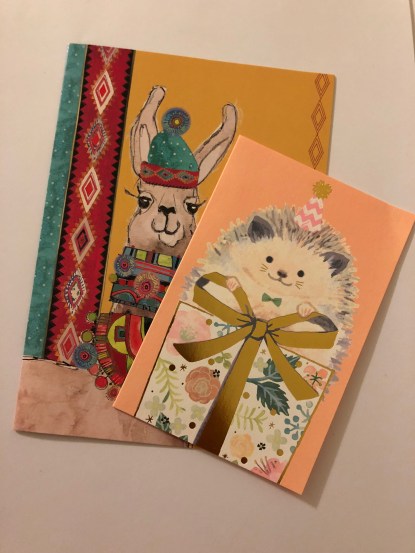
For instance, my birthday cards. Given to me the day I arrived back in California after spending three weeks away this summer in Belize. I was exhausted, but was picked up from the airport by my best friend. She handed me these cards, one from her and one from our roommate Catherine, along with gifts she had brought me from her own summer travels and a piñata. I cried happily, relieved to be back in my home country and relieved to feel so loved and comfortable. These women never cease to make me smile, and remain to be important aspects of my community and group identity.
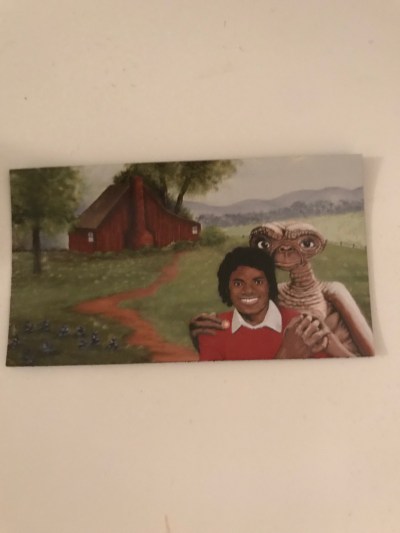
My sister bought me this magnet. We stopped into a store near Pike Place in Seattle, and looked around at the hilarious art that decorated the walls. The artist and store owner encouraged us to buy a poster or magnet, and she took the bait. This trip was special, only the second trip we’ve taken together with my father and our other sister as adults. My dad is 75 years old, and my sisters have children that are my age. We’ve never been close, and animosity between myself and my half-siblings has existed since I was born, an unfortunate product of my mother and father beginning a messy relationship during my dad’s divorce of his first wife. But in the past few years, there has been a conscious effort to dismantle the hurt keeping us apart, and see each other as individuals undefined by our family’s past.
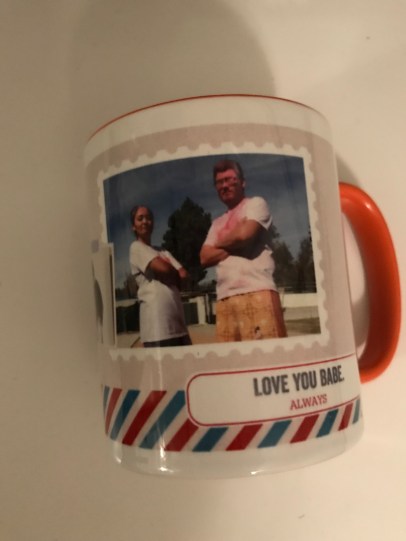
“Love you babe. Always.” He no longer calls me babe, but I would like to think he still loves me. Not in the same way of course, but we have known each other since middle school. It wasn’t until college that we dated, but we were friends before and have remained friends since ending things. Our relationship was complicated, and despite our commitment and love for one another, it came at a time when I wasn’t able to care for myself properly, much less focus my energy on a relationship with someone else. But he undeniably shaped my personality and who I am today, and taught me so much about what sacrifice and compassion looks like in a relationship.
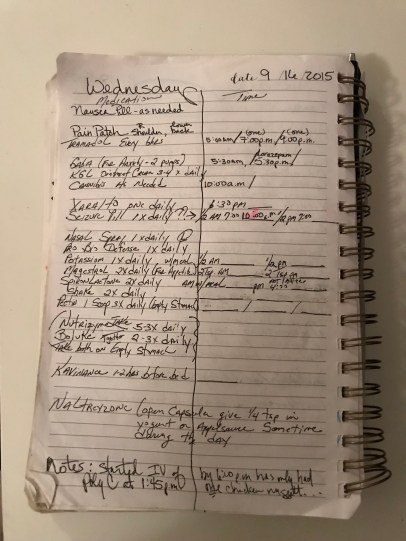
Two items that represent the same person, but at different times. The first, a journal, reflects a time of hurt. Each word on the left documents the medication that my mother was on during her treatment for cancer. It was late when the doctors caught it, stage 4, and the treatment was aggressive and unforgiving. Her medications changed her personality, and having to care for her changed the nature of our relationship. I grew up quickly, and became her caregiver while I was hardly old enough to care for myself. I denied my weaknesses to become strong, while she became more and more dependent.
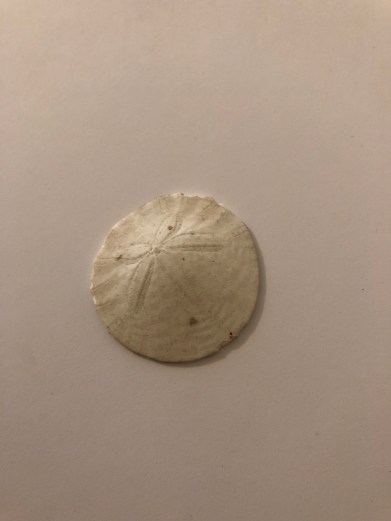
The sand dollar reflects something different entirely. When I was younger, walking along the beach, I mom and I would play a game. For every sand dollar I could find, she would give me a dollar in return. It couldn’t be cracked in half or missing a chunk, which seemed nearly impossible considering the fragility of sand dollars. I found maybe three over the years of us playing this game, but it didn’t matter. I always kept looking regardless of its unlikelihood. About two weeks after she passed, I was walking along the beach, reflecting on our game. Without really even trying, I found five that day, none of which were shattered or broken. It was lovely, and it felt like I was heard in my grief.
In both large and small ways, my mother and her untimely death have shaped my identity. I feel a strange connection with others that also lost their parent young, and uniquely understand the effects of cancer treatments and medications. I miss out on mother-daughter brunches and worry about who might walk me down the aisle. But even in smaller aspects of my identity, I have been changed by her influence on me. I listen to Justin Timberlake because she loved his music, I know quotes from Friends because we watched together, and I can’t stand roses because she didn’t like them either. Growing up I fought with tooth and nail to avoid becoming like her; now, I savor the opportunity to emulate some part of who she was.
“Lifting the Veil” Annotation
Author: Henry Louis Gates, Jr.
Important Vocabulary: Mnemonic device. Techniques a person can use to help them improve their ability to remember something. In other words, it’s a memory technique to help your brain better encode and recall important information. Belletristic. Literature regarded as a fine art, especially as having a purely aesthetic function. Light and elegant literature, especially that which is excessively refined, characterized by aestheticism, and minor in subject, substance, or scope. Amos ‘n’ Andy. During the late 1920’s and early 30’s, the most popular radio program in the United States was “Amos ‘n’ Andy”; many historians contend that it was the most popular show ever broadcast. Perennial. Lasting or existing for a long or apparently infinite time; enduring or continually recurring.
Initial Reaction: The consideration of my racial and cultural identity is something relatively new to me. It was always within my conscious awareness, and I had been the recipient of racist comments and judgments in the past, but it wasn’t until college that I was so freely given the opportunity to question what I had been taught about myself in the context of a broader historical context. It is even more recent still that I would write about my experience as a mutli-racial and multi-cultural female living in California, and carefully parse through the overlapping and intersecting aspects of my personal identity. “Lifting the Veil” has caused me to consider how often I censor myself because of how audiences of a different race might view me after reading my work.
The Complexity of Identity: “Who Am I?” Annotation
Author: Beverly Daniel Tatum
Important Vocabulary: Charles Cooley. American sociologist who employed a sociopsychological approach to the understanding of society. Looking glass self. Cooley theorized that the sense of self is formed in two ways: by one’s actual experiences and by what one imagines others’ ideas of oneself to be—a phenomenon Cooley called the “looking glass self.” This dual conception contributed to Cooley’s fundamental theory that the mind is social and that society is a mental construct. Erik Erickson. Erik Homburger Erikson was a German-American developmental psychologist and psychoanalyst known for his theory on psychological development of human beings. Precocious. Having developed certain abilities or proclivities at an earlier age than usual. Jean Baker Miller. A psychiatrist who disputed traditional notions of social roles and developed a theory that serves as a foundation for treating women’s depression and other disorders through the building of fruitful relationships. Inequitable. Unfair, unjust.
Questions: What did the author’s personal development look like in regards to her identity?
Notable Quotes: “Common across these examples is that in the areas where a person is a member of the dominant or advantaged social group, the category is usually not mentioned. That element of their identity is so taken for granted by them that it goes without comment.” “Whether it is reflected in determining who gets the best jobs, whose history will be taught in school, or whose relationships will be validated by society, the dominant group has the greatest influence in determining the structure of the society.” “The thread and threat of violence runs through all of the isms. There is a need to acknowledge each other’s pain, even as we attend to our own.”
Initial Reaction: Patience is necessary, and takes work when the others around you cannot grasp the complexity of the issues you face on a daily basis. It is and has been difficult to talk to those in the cultural majority about the reality for those in the cultural minority, as a heterosexual, White male can never quite understand or live the experiences I have had. In fact on multiple occasions, in the midst of attempting to share my personal experiences, I have been told (as if it were a strange compliment, or goal of mine) that I don’t look Hispanic because I don’t wear heavy eyeliner, or that a close friend of mine doesn’t think of me as anything other than White. It can be frustrating and exhausting to constantly consider my actions and words in the context of race (and other aspects of my identity), however Tatum does an excellent job in reminding her readers to consider the systems of privilege they may be overlooking. In addition to my minority status, I am an able-bodied, upper middle-class, cis-gendered individual, and cannot forget my responsibility to acknowledge my experience of dominance in these aspects of life.
 A Composition of Self by Alexis Rivera